
放
Word 于 - HSK 6
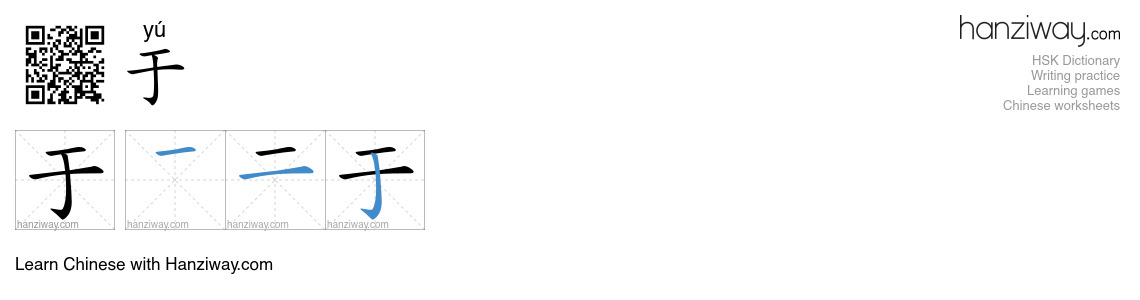
于
Translation
- (prep.) at, in; from; by; indicating the object of an action; (indicating comparison) than, (used after a verb or adjective) with reference to, to
- (n.) Yu (Chinese family name)
Simplified
于
Traditional
於
Strokes count
3

Words with 于 42
Same pronunciation 54
Similar pronunciation 105
Synonyms 1
Writing and worksheets
Stroke order
Games & Exercises 9
Find Hanzi
Find Hanzi is a playful exercise for learning Chinese. Spot characters, boost attention, download PDF, and enjoy studying Chinese through games!
Find Radical
Practice Chinese radicals online: choose the Hanzi containing the target component, use optional pinyin hints, and create printable PDF exercises.
Tone Trainer
Learn Mandarin tones online with the Chinese Tone Trainer. Practice tone recognition, pronunciation, and exercises for beginners and advanced learners.
Hanzi Connect
Match Hanzi with pinyin or identify words by sound. Use your own vocabulary or HSK/YCT levels. Play online after sign-in; printable PDFs with answers are for PRO.
Lost Stroke
Play online: find the missing stroke or radical, restore Chinese characters in order, and create printable PDF worksheets with pinyin and answers.
Calligraphy
Create calligraphy and custom Chinese character coloring pages with pinyin, stroke order, outline styles, and writing grids. Download a print-ready PDF for class or home.
Memo
Flip cards to match Chinese characters or pair Hanzi with Pinyin. Build a custom HSK/YCT deck, play online, and create printable PDF cards.
Sudoku
Play Hanzi Sudoku online with 4×4, 6×6, or 9×9 grids, four difficulty levels, custom characters, and HSK/YCT sets. Create printable PDFs with answers.
Writing trainer
Practice Chinese character writing online with correct stroke order, outlines, a 3–2–1 preview, mistake-based hints, pinyin, and focused Hanzi review.









Examples of use 25
位
于
(v.) be located, be situated
由
于
意
见
不
一
样
,
所
以
两
位
老
板
都
不
高
兴
。
Both bosses are unhappy because of their different opinions.
运
动
健
身
要
循
序
渐
进
,
不
要
急
于
求
成
。
Exercise and fitness should be carried out step by step, and don't rush for success.
由
于
一
半
的
人
都
没
有
来
,
我
们
今
天
的
会
开
不
了
了
。
As half of the people didn't come, we couldn't hold the meeting today.
你
因
为
过
于
忧
郁
而
吃
药
。
You take medicine because you are too depressed.
电
脑
的
好
处
大
于
坏
处
。
The advantages of computers outweigh the disadvantages.
他
有
一
双
过
于
操
劳
的
大
手
。
He has a pair of overworked hands.
绳
子
终
于
被
咬
断
了
,
巨
网
出
现
了
一
个
大
缺
口
。
The rope was finally bitten, and a big gap appeared in the giant net.
这
璧
有
点
儿
小
毛
病
,
请
大
王
把
璧
归
还
于
我
。
There is something wrong with this piece. Please return it to me.
由
于
这
个
大
学
越
来
越
有
名
,
中
国
学
生
和
外
国
留
学
生
的
数
量
都
在
增
加
。
As the university becomes more and more famous, the number of Chinese students and foreign students is increasing.
当
地
的
人
都
很
乐
于
助
人
。
The local people are very helpful.
郝
琳
硕
觉
得
自
己
的
收
获
远
多
于
给
孩
子
们
的
。
Hao Linshuo feels that his gains are far more than those for children.
三
个
小
时
快
乐
减
一
个
小
时
无
聊
等
于
两
个
小
时
快
乐
,
也
就
是
说
,
我
愉
快
地
度
过
了
两
个
小
时
。
Three hours of happiness minus one hour of boredom equals two hours of happiness, that is to say, I spent two hours happily.
由
于
家
里
老
人
突
然
生
病
,
我
只
好
放
弃
出
国
。
I had to give up going abroad due to an old family member suddenly falling ill.
由
于
人
们
在
一
周
内
的
营
养
摄
入
和
饮
食
模
式
会
影
响
到
他
们
的
体
重
变
化
,
因
此
节
食
者
的
体
重
会
在
一
周
内
上
下
波
动
。
Because people's nutrient intake and diet patterns will affect their weight changes during the week, dieters' weight will fluctuate up and down during the week.
除
此
以
外
,
由
于
人
们
争
先
恐
后
报
考
热
门
专
业
,
以
致
人
才
饱
和
,
就
业
困
难
。
In addition, because people are scrambling to apply for popular majors, talents are saturated and employment is difficult.
你
终
于
回
来
了
!
You're back at last!
由
于
连
年
的
战
争
,
家
里
生
活
非
常
困
难
。
Life at home is very difficult because of years of war.
我
太
激
动
了
!
我
终
于
申
请
到
奖
学
金
了
。
I'm so excited! I finally earned a scholarship.
青
出
于
蓝
而
胜
于
蓝
lit. the color blue is made out of indigo but is more vivid than indigo (idiom) | fig. the student surpasses the master
我
出
生
于
一
九
九
二
年
。
I was born in 1992.
我
毕
业
于
北
京
语
言
大
学
。
I graduated from Beijing Language and Culture University.
这
座
城
市
正
在
遭
受
轰
炸
,
处
于
危
险
状
态
。
The city is suffering from the bombing and is in a dangerous condition now.
易
于
控
制
easy to control
出
于
和
平
的
目
的
He is always under others' control.